B2B Branding Strategies: 5 Ways to Build a Brand Buyers Remember
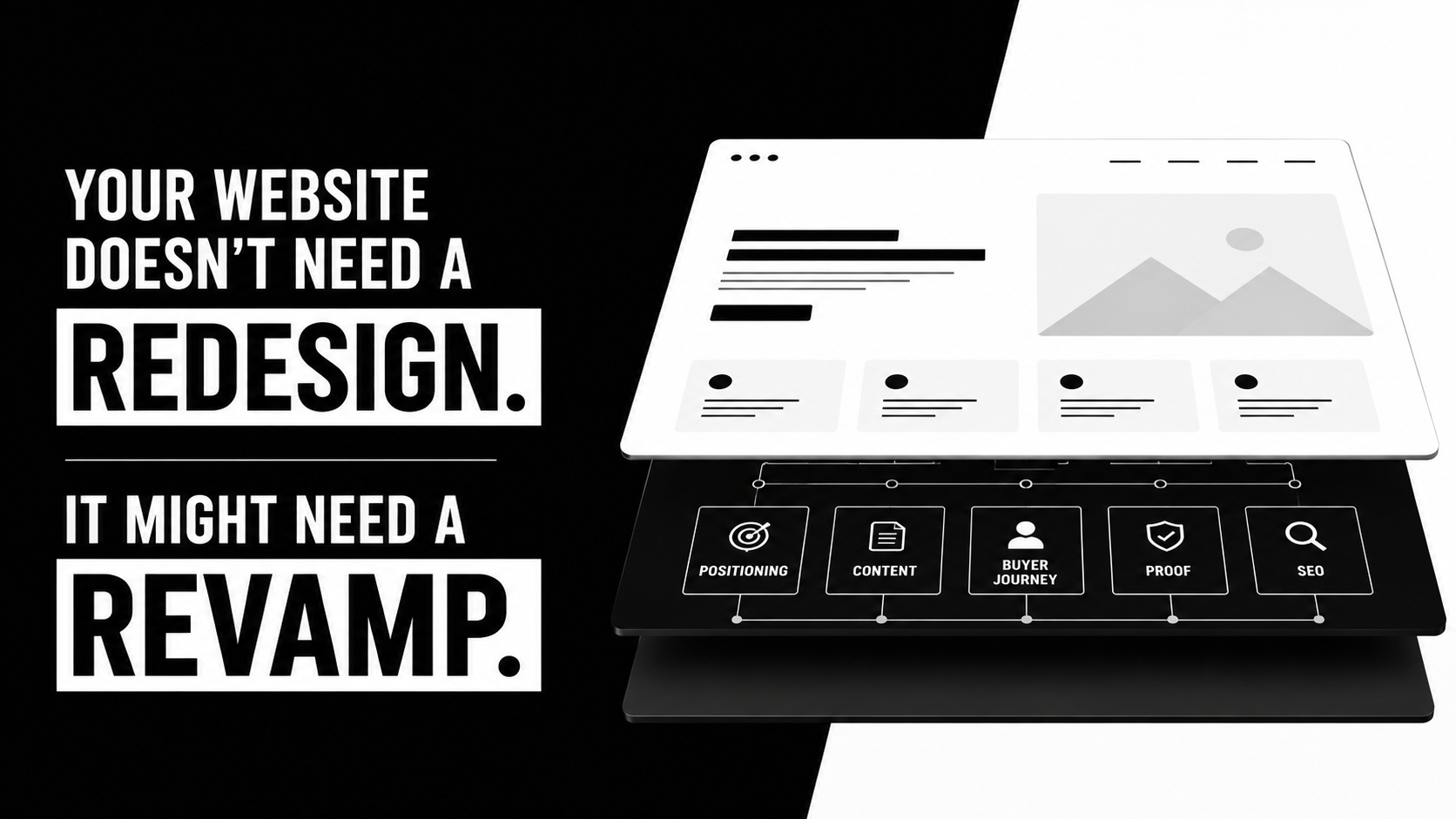
Most B2B brands do not have a design problem.
They have a clarity problem.
Their homepage sounds like everyone else's. Sales explains the company differently from marketing. Product language dominates the website. The visual identity looks polished, but buyers still need three paragraphs to understand what the company does.
A stronger logo will not fix that.
B2B branding starts with a sharper answer to a harder question. Why should the right buyer choose you?
Everything else, from your website and content to sales decks and LinkedIn posts, should reinforce that answer.
That is what separates a recognizable B2B brand from a company with nice colors.
What is B2B branding?
B2B branding is the set of ideas, expectations and associations buyers attach to your company.
It is what they remember after closing the tab.
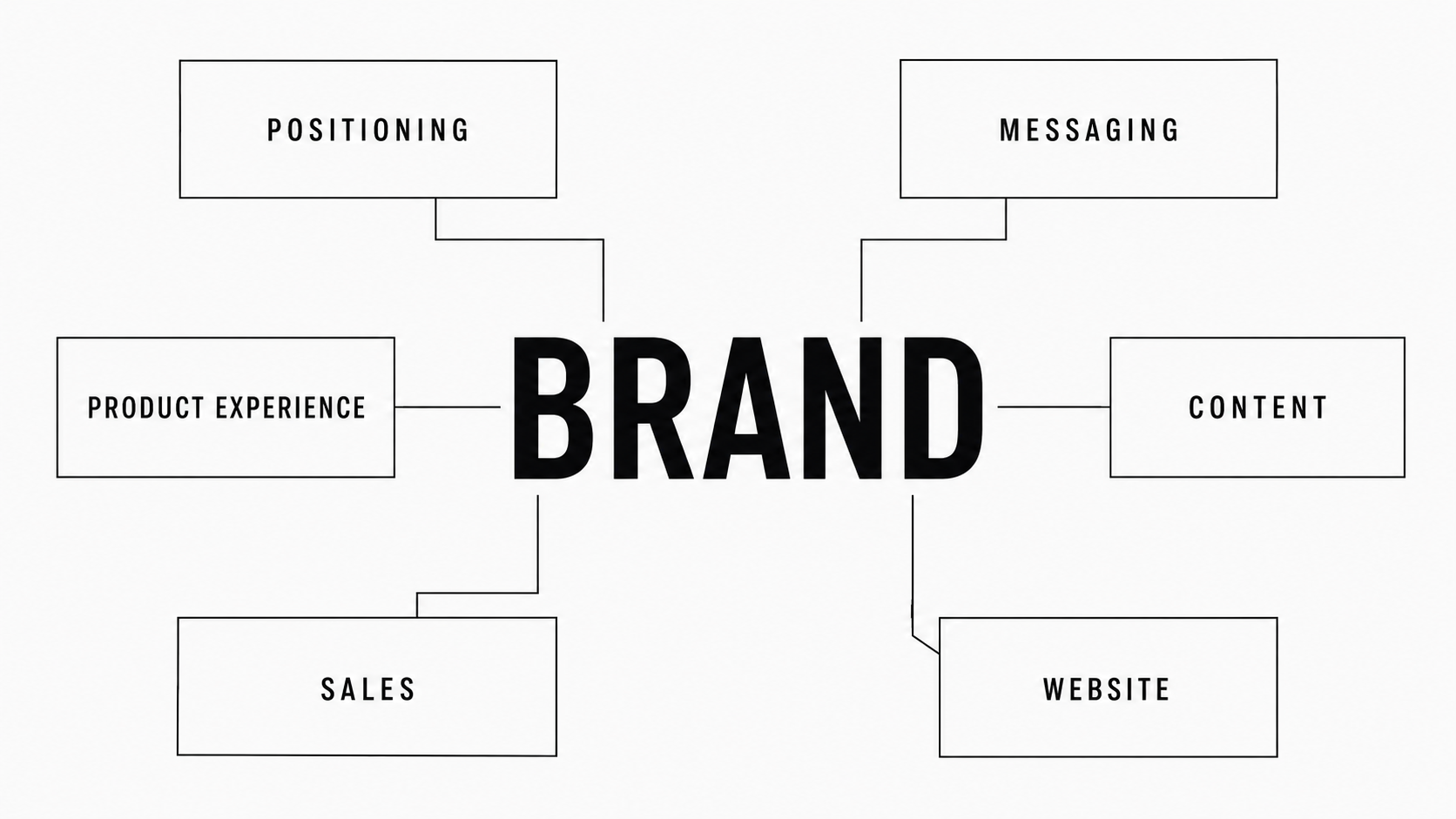
Your visual identity contributes to it, but so do your positioning, messaging, content, product experience, sales conversations, customer stories and point of view.
A strong B2B brand does four things well:
- Clarifies what the company does and who it is for
- Differentiates it from reasonable alternatives
- Builds trust before a sales conversation
- Creates memory so buyers recognize the company when the need appears
That last point matters.
B2B buyers rarely discover a company and purchase immediately. They research, compare, ask colleagues, revisit websites, read content and talk internally.
Your brand has to survive that process.
Why B2B branding matters more when products look similar
Most technology categories are crowded.
Features get copied. Competitors adopt the same terminology. AI makes it faster to build products, websites, content and campaigns that look competent.
That makes "we have great features" a weak position.
Buyers need other reasons to remember you.
A clear brand gives them those reasons. It can make your company easier to understand, easier to trust and easier to explain internally.
Consider what happens inside a buying committee.
One person discovers you. Another checks the website. Someone asks how you differ from another option. A technical stakeholder investigates whether the product is credible. A senior decision-maker wants to know whether choosing you feels risky.
Your brand has to help all of them reach the same conclusion.
If every touchpoint tells a different story, confidence drops.
B2B branding is not B2C branding with different colors
B2B and consumer brands both need recognition and trust, but B2B decisions carry different pressures.
The person evaluating your product may have to justify the purchase to a manager, finance team, procurement department or technical lead.
They are not only asking whether they like it. They are also asking whether they can defend choosing it.
That changes the job of the brand.
Good B2B branding needs personality, but it also needs evidence.
A distinctive headline without proof is weak. A beautiful website without clear positioning is weak. A bold point of view without product credibility is weak.
The strongest B2B brands combine differentiation with reasons to believe it.
1. Build the position before you build the brand
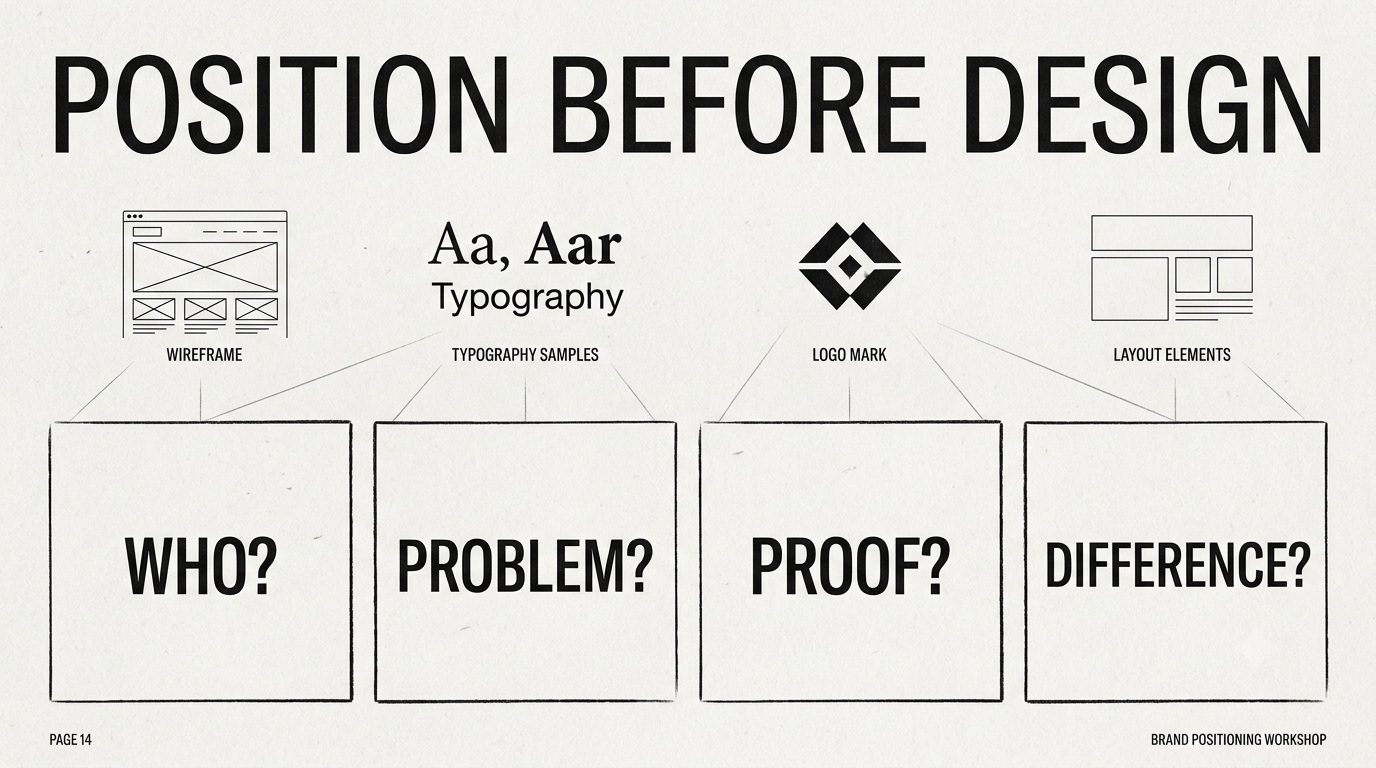
Many B2B branding projects begin in the wrong place. Color palettes. Fonts. Logos. Moodboards. Website references.
Those decisions matter later. First, decide what the company should mean.
Start with four questions.
Who are you trying to win?
"Businesses" is not an audience. Neither is "B2B companies."
Be specific enough that your message can exclude people.
A product built for enterprise security teams should not sound like one built for solo founders. A platform for finance leaders should not explain value the same way it would to developers.
If everyone is the audience, your positioning will become vague enough for everyone to ignore.
What problem do buyers believe they have?
Use their language, not your internal terminology.
Your team may think you sell an "AI-powered orchestration layer." The buyer may think their team wastes hours moving data between five systems.
Start where the buyer already is.
Why should they believe you?
Claims need proof.
That proof might come from customer outcomes, product capabilities, expertise, case studies, integrations, methodology or a demonstrably different way of solving the problem.
Do not say "industry-leading" when you can show why the product is useful.
What makes your approach different?
Features matter, but positioning based entirely on features is fragile.
A competitor can ship a feature.
A stronger position may come from your methodology, specialization, worldview, customer experience, product philosophy or the problem you choose to solve differently.
At Envizn Labs, positioning comes before full design for this reason. The website needs a clear story before visual execution can strengthen it. The design should express the strategy, not substitute for one.
2. Give the brand a point of view

Most B2B content is technically correct and instantly forgettable.
It explains. It summarizes. It lists best practices. It rarely takes a position.
That is a missed opportunity.
Strong brands do not simply know things. They have opinions about them.
Your point of view might challenge an accepted practice in your category. It might explain why customers repeatedly solve a problem the wrong way. It might name a shift your market has not fully understood yet. It might expose a tradeoff competitors prefer not to discuss.
A useful point of view has three parts:
- Observation: what are you seeing?
- Belief: what do you think it means?
- Implication: what should the buyer do differently?
For example, many B2B website redesigns change the interface without changing the argument. If buyers still cannot understand why the company matters, better visual design will not solve the real problem.
That is more memorable than "great websites combine strategy and design."
One says something. The other fills space.
Your experts should sound like experts
A company's strongest ideas often sit inside the heads of founders, product leaders, strategists, engineers and customer-facing teams.
Extract them.
Turn customer questions into articles. Turn strong sales explanations into website copy. Turn internal debates into useful points of view. Turn lessons from projects into frameworks.
Thought leadership works when there is actual thought behind it.
3. Create content your competitors cannot easily reproduce

Most B2B companies compete for attention with the same content. "10 trends to watch." "The ultimate guide to something." "5 benefits of something else."
AI has made generic educational content even easier to produce.
That means volume alone is a poor moat.
The better question is this. What can we publish that another company cannot recreate by reading the first page of search results?
Start with what you already know:
- Customer conversations
- Product data
- Internal research
- Sales objections
- Patterns across projects
- Original frameworks
- Experiments
- Expert opinions
- Lessons from failures
- Before-and-after examples
These inputs produce content with fingerprints.
Build depth before building channels
You do not need a podcast, newsletter, video series, research report, webinar program and daily social calendar at once.
Pick one format you can make genuinely useful. Then build consistency around it.
A strong article series is better than six neglected channels.
Once the ideas work, repurpose them. A research piece can become several LinkedIn posts, a sales resource, a webinar topic, an FAQ section and material for AI search visibility.
The content should compound instead of disappearing into an archive.
4. Test messaging instead of debating it forever
Positioning requires judgment. It does not require guesswork forever.
B2B teams can spend weeks arguing over whether a homepage should say "automate," "orchestrate," "simplify" or "transform."
Eventually, the market should get a vote.
Test meaningful variations in:
- Homepage headlines
- Landing-page positioning
- Ad messaging
- Email subject lines
- Product descriptions
- Calls to action
- Sales talk tracks
But test ideas, not punctuation.
Changing "Start today" to "Get started" tells you little about your brand. Testing two different value propositions might.
Pair numbers with conversations
Conversion data can tell you what happened. Customers can help tell you why.
Talk to buyers who converted. Talk to buyers who did not.
Ask what they thought you did before the sales call. Ask what nearly stopped the deal. Ask what they compared you with. Ask what finally made the product make sense.
Their answers often expose gaps your analytics cannot.
If prospects consistently misunderstand the same thing, you have found a messaging problem.
5. Make every touchpoint tell the same story
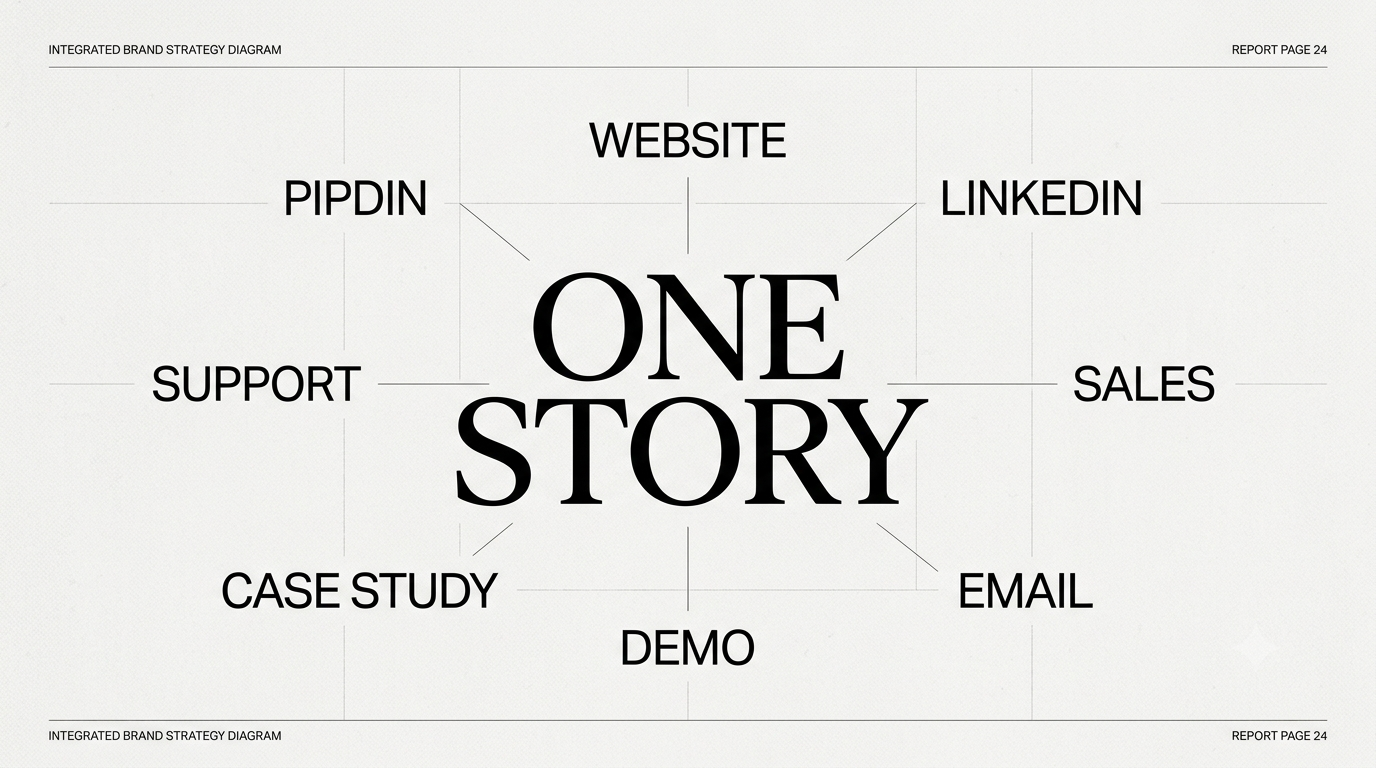
Your brand does not live on the homepage. It lives wherever buyers encounter you.
That includes:
- Search results
- AI-generated answers
- Sales decks
- Product demos
- Case studies
- Emails
- Webinars
- Documentation
- Customer support
- The product itself
Consistency does not mean repeating the same sentence everywhere. It means reinforcing the same position.
Imagine your website promises a simple, modern product while the demo feels complicated. Or marketing positions the company as an enterprise platform while sales leads with low price. Or your thought leadership talks about innovation while your website looks untouched for five years.
Those contradictions create friction.
Buyers may not consciously identify the inconsistency, but they feel it.
A brand becomes credible when the experience keeps proving the promise.
What makes a B2B brand memorable?
Memorability does not come from being louder. It comes from being distinct.
Strong B2B brands tend to have several things working together.
A clear category or problem
Buyers understand where you fit.
A specific promise
They know what improves if they choose you.
Recognizable language
The company has phrases, ideas or terminology people associate with it.
A consistent visual system
Design makes the brand recognizable before every word is read.
Proof
Claims are backed by customer evidence, expertise, product capability or useful demonstrations.
A point of view
The company gives buyers a reason to think differently about the problem.
You do not need to manufacture personality. You need to stop sanding away everything distinctive.
How to measure B2B branding
Brand is harder to measure than a button click. That does not make it unmeasurable.
Look for signals across the buying journey.
Branded search
Are more people searching for your company by name?
Direct traffic
Are buyers arriving without needing an ad or search result first?
Search and AI visibility
Does your company appear when prospects research the problems and categories you want to own?
This matters more as buyers use AI systems alongside traditional search to discover and evaluate vendors.
Sales conversations
Are prospects arriving with a clearer understanding of what you do? Are sales teams spending less time correcting misconceptions?
Win-loss feedback
What do buyers remember about you? Why do they choose you? Why do they choose something else?
Content reach
Are your ideas being cited, shared, discussed or repeated?
Pipeline
Do prospects who already know the brand move differently through the funnel?
No single metric proves brand strength. Look for the pattern.
5 B2B branding mistakes that make good companies forgettable
1. Starting with visual design
A new identity cannot rescue unclear positioning.
Work out what the company needs to communicate first. Then design it.
2. Copying category language
Visit enough B2B websites and the vocabulary starts blending together. Innovative. Seamless. Powerful. Scalable. Next-generation. End-to-end.
If a competitor could paste your headline onto its homepage unchanged, the headline is not doing enough work.
3. Writing for people who already understand the product
This happens constantly in SaaS.
Product teams know the category, terminology and technical context. New buyers may not.
A website should not require the visitor to understand your internal language before they can understand the value.
Start with the problem. Earn the right to explain the product.
4. Treating brand and performance as separate jobs
Brand should not be a department that creates campaigns while growth teams chase conversions somewhere else.
Your strongest landing pages should reinforce your position. Your sales materials should reinforce it. Your search content should reinforce it. Your ads should reinforce it.
Every performance campaign teaches the market something about your company. Make sure it teaches the right thing.
5. Rebranding every time the message feels uncomfortable
Strong positioning requires commitment.
Teams often weaken good ideas because someone worries a message is too specific. So they add more audiences. More capabilities. More adjectives. More caveats.
The message becomes safer and worse.
Clear positioning should leave some things out. That is the point.
Your website is where B2B branding gets tested

A brand strategy can sound excellent in a workshop. The website exposes whether it actually works.
Can a first-time visitor understand what you do?
Can the right buyer see themselves in the message?
Can they tell why you are different?
Can you prove what you claim?
Does the design reinforce the positioning?
Can someone move from interest to evidence without hunting for answers?
If not, the problem is bigger than copy.
The website is where positioning, content, design, proof, SEO, AEO and conversion paths meet. When those pieces disagree, the brand feels weaker than the company behind it.
That is why Envizn Labs approaches B2B websites from strategy outward. Positioning shapes the story. The story shapes the content and design direction. Development turns that system into a working site. Search, AI visibility, automation and ongoing improvements keep it useful as the business changes.
The website should not just display the brand.
It should make the brand easier to understand, trust, remember and choose.


Turn Your Vision into a Scalable Digital Experience
From brand to backend, we create systems and experiences that actually move the needle.
Webflow Website Maintenance: 7 Practices That Keep Your Site Working
10 Best Landing Page Design Patterns for B2B Tech in 2026