How to Choose the Best Webflow Agency for Your B2B Website
Choosing a Webflow agency is easy if all you need is someone who can build in Webflow.
Choosing the right one is harder.
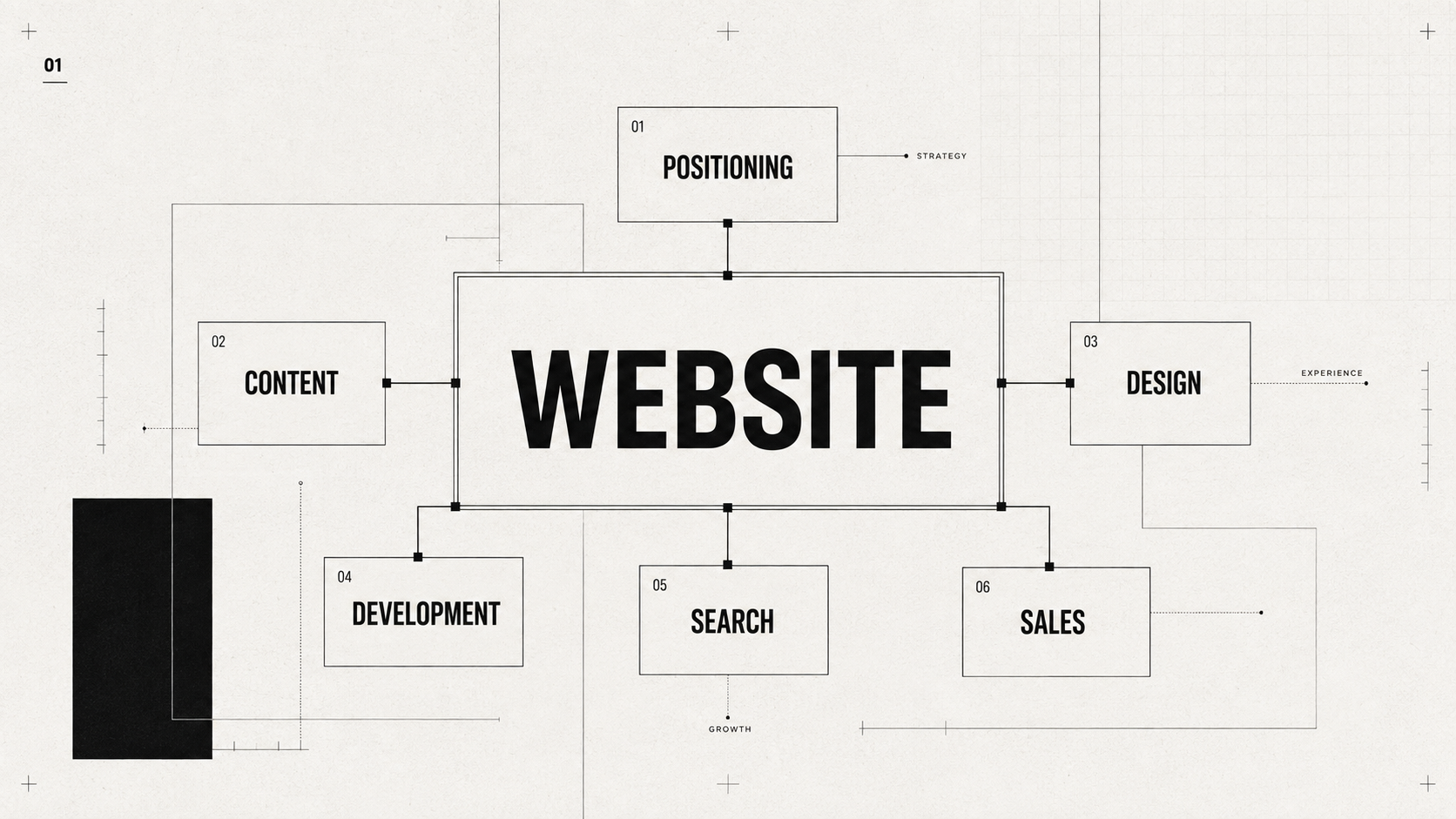
For a B2B technology company, the website sits where positioning, sales, marketing, product, content, search and brand meet. A technically clean Webflow build matters, but it cannot compensate for unclear messaging, weak information architecture, generic design or a site that becomes difficult to evolve six months later.
So the question is not simply whether an agency can build a Webflow website.
A better question is whether the agency can turn your website into an asset that helps the business explain itself, earn trust, generate demand and keep improving.
Here is how to evaluate that.
Why Webflow makes sense for B2B websites
Webflow is a strong fit for marketing-led websites because it gives design and development teams considerable control without requiring businesses to manage the infrastructure that comes with a traditional self-hosted stack.
Webflow provides managed hosting, SSL and TLS, global content delivery, security updates and other infrastructure through its hosting platform. It also gives teams visual page-building and CMS capabilities, reducing dependence on developers for routine content updates.
That combination is particularly useful for B2B companies whose websites are constantly changing.
A new product launches. A positioning shift changes the homepage. Marketing needs another landing page. Customer stories need to go live. SEO creates opportunities for new content. Sales wants stronger industry pages.
The website cannot become a bottleneck every time one of those things happens.
But Webflow itself does not solve the strategic problem.
It gives you the infrastructure and tools. The quality of the result still depends heavily on the people deciding what the website should say, how it should be structured, what it should prove and how the experience should work.
That is where agency selection matters.
Start with the business problem, not the redesign
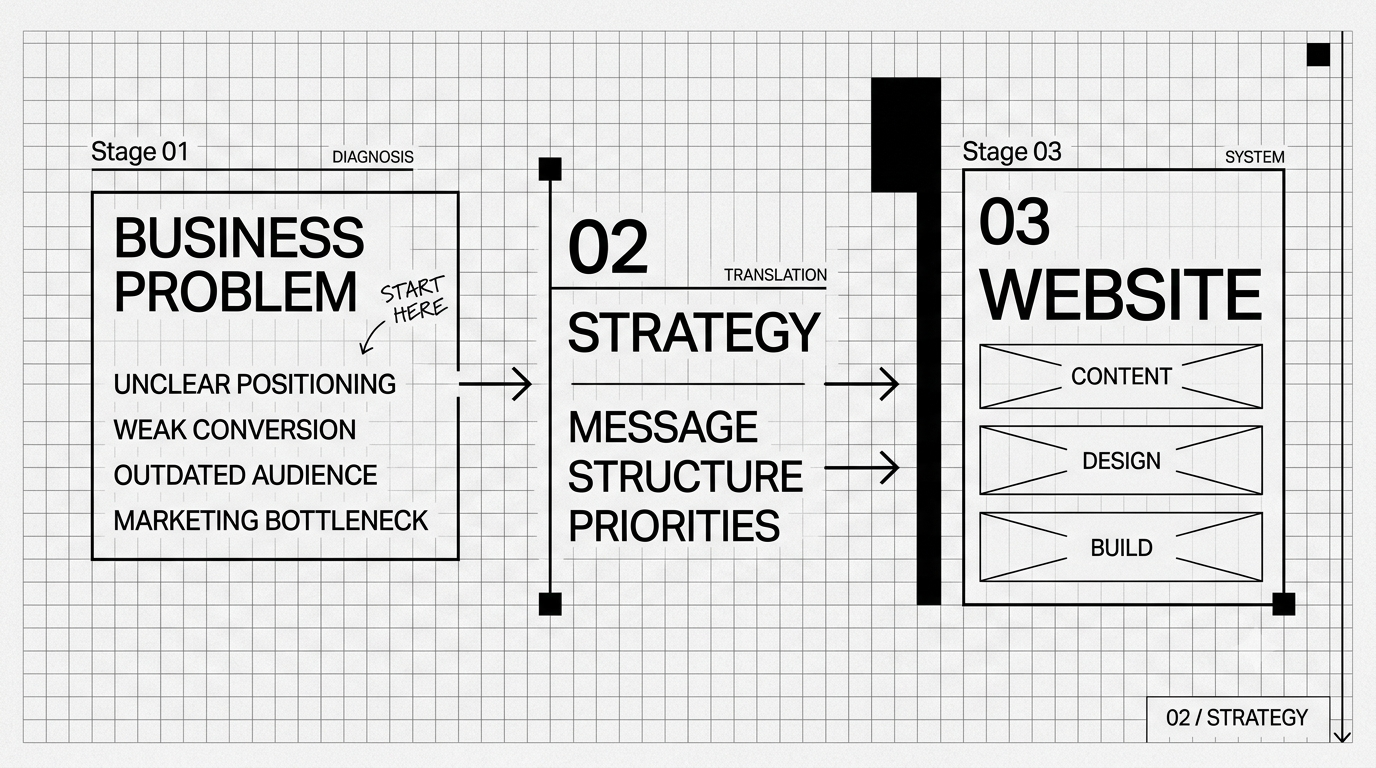
Before comparing agencies, get clear on why the project exists.
"We need a new website" is rarely the complete answer.
Maybe your company has moved upmarket, but the website still speaks to smaller customers. Perhaps the product has become more sophisticated while the messaging has become harder to understand. You might be generating traffic without enough qualified conversations. Or the site looks polished but leaves prospective buyers wondering what actually makes the company different.
Sometimes the biggest problem is operational. Marketing cannot publish anything without engineering support.
These are very different challenges.
A visual redesign might solve one. It will not automatically solve the others.
That is why strong website engagements usually begin with questions about the business and the buyer, before anyone discusses animation styles or homepage layouts.
At Envizn Labs, positioning and content direction come before the full design and Webflow build. The goal is to determine what the company needs to say, prove and enable on each page before turning those decisions into the website itself.
When evaluating agencies, look for the same strategic curiosity.
If the first conversation is mostly about colors, references, components and visual preferences, you may be hiring someone to redesign what you already have rather than solve what is actually holding the website back.
1. Look for positioning capability, not just Webflow expertise
.png)
A beautifully built website can still leave buyers confused.
This happens often in B2B technology because companies understand their products far better than visitors do. Internal terminology makes its way onto the homepage. Features become the hierarchy. Important context gets assumed instead of explained.
The result is technically accurate copy that makes perfect sense to the team and considerably less sense to a first-time buyer.
A good Webflow agency should be able to challenge the story, not merely format it.
Ask how they determine:
- Who the most important buyer is
- What that buyer needs to understand first
- Which problems deserve prominence
- How the product should be differentiated
- What evidence supports the positioning
- How messaging changes across the homepage, product pages, use cases, industries and conversion pages
You do not necessarily need a complete rebrand.
You do need a partner capable of recognizing when the problem sits upstream of design.
2. Evaluate the thinking behind the portfolio
Every agency will show you its strongest work. Do not stop at the screenshots.
A portfolio tells you what an agency can make. A case study should tell you why it made those decisions.
When reviewing projects, look beyond visual similarity to your desired website. Ask what changed between the client's old and new experience.
Was the information architecture reconsidered?
Did the agency simplify a complicated product?
Was the site designed around several buyer types?
Were reusable systems created for the marketing team?
Did the project involve custom tools, integrations, CMS architecture, search considerations or more advanced development?
Most importantly, can the agency explain its reasoning clearly?
Great design is not the ability to reproduce the current visual language of B2B SaaS. It is the ability to make deliberate decisions around a particular company's product, market, buyers and ambitions.
A portfolio full of fashionable websites can still hide shallow strategic thinking.
3. Make sure content and design are developed together
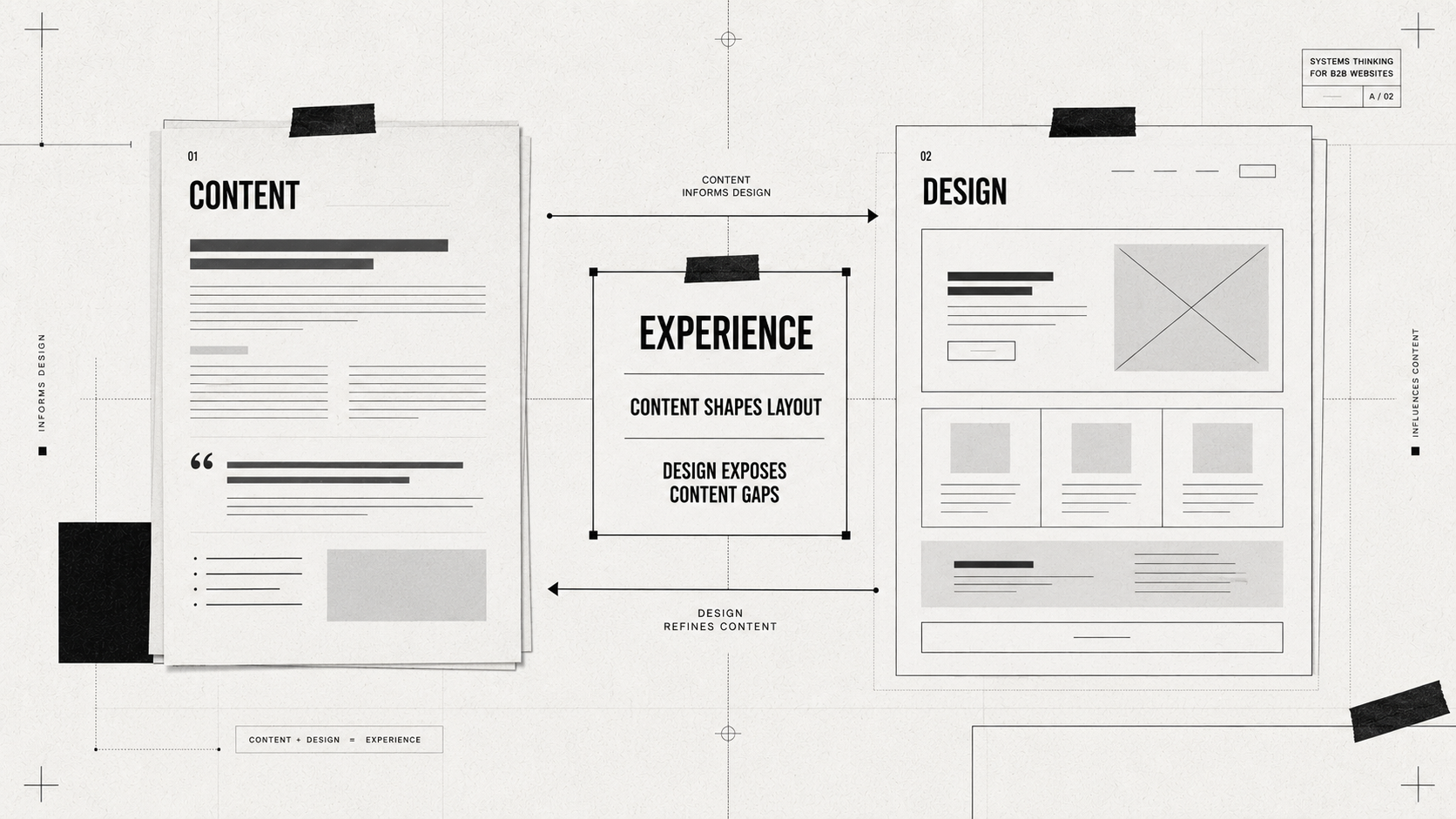
One of the easiest ways to weaken a website project is to separate copy and design too aggressively.
Copy gets written in a document. Designers work with placeholder content. Later, everyone tries to squeeze the real message into components that were created without it.
The page technically works, but the story feels assembled rather than designed.
For B2B websites, content should influence layout.
A complex product explanation may need a visual model. A strong proof point may deserve more prominence than another product feature. A page aimed at enterprise buyers may need substantially more trust-building than a campaign landing page.
The relationship works both ways. Design can expose weaknesses in the content, too. If every section needs three paragraphs to make an idea understandable, the messaging itself may need work.
Look for an agency that treats strategy, copy and design as connected disciplines rather than sequential deliverables passed between isolated teams.
4. Check the depth of their Webflow development
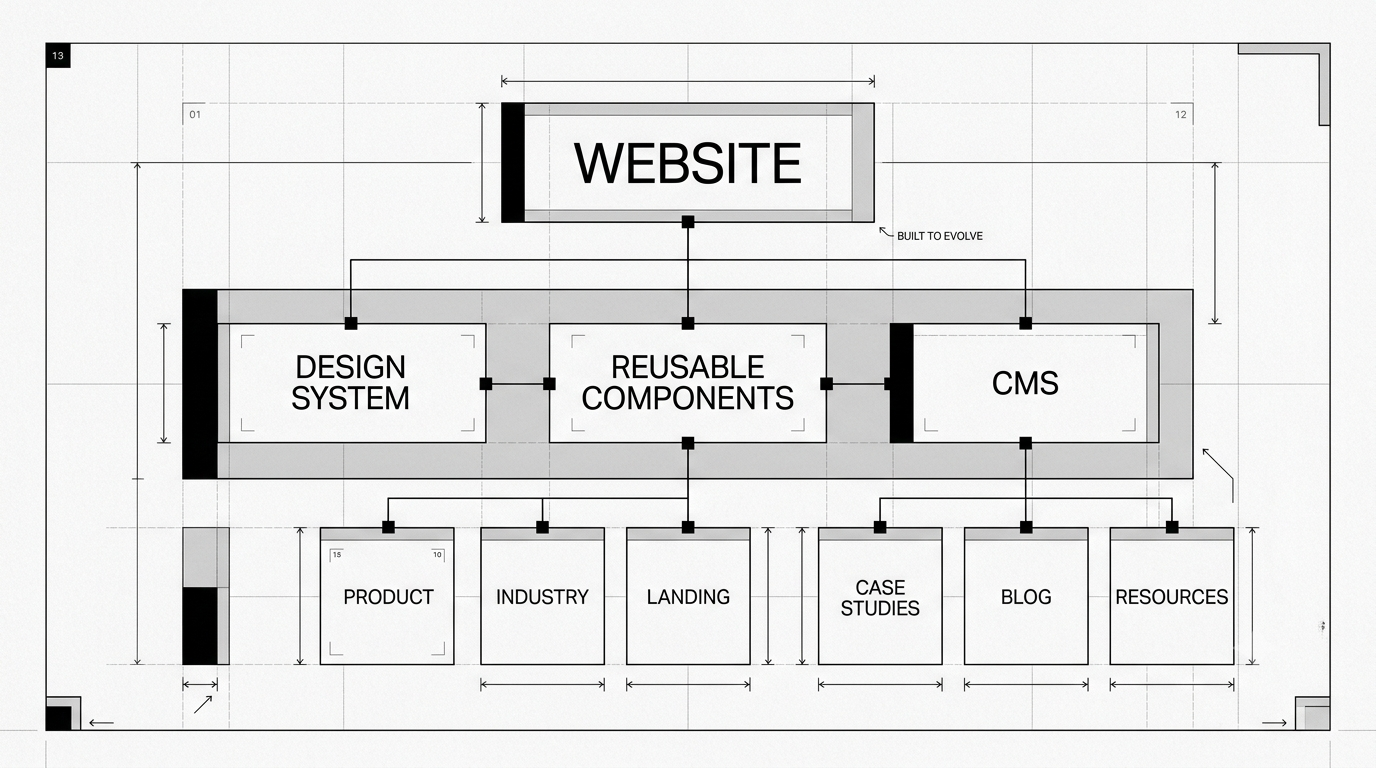
Webflow expertise involves much more than reproducing a Figma file accurately.
Your agency should be thinking about what happens after the initial pages are built.
How will new pages be created?
How is the class system organized?
Which elements should become reusable components?
How should CMS collections be structured?
Can the marketing team safely edit important content?
What happens when another product, industry, resource type or campaign is added?
Webflow now provides increasingly sophisticated CMS, page-building, hosting, staging and publishing capabilities. Those capabilities become far more valuable when the implementation itself is designed to support growth.
A rushed build can look perfectly fine on launch day and become increasingly frustrating later.
A well-architected build gives your team room to move.
Ask prospective agencies to show you the Webflow side of their work, not just the published website.
5. Treat responsive design as part of the design process
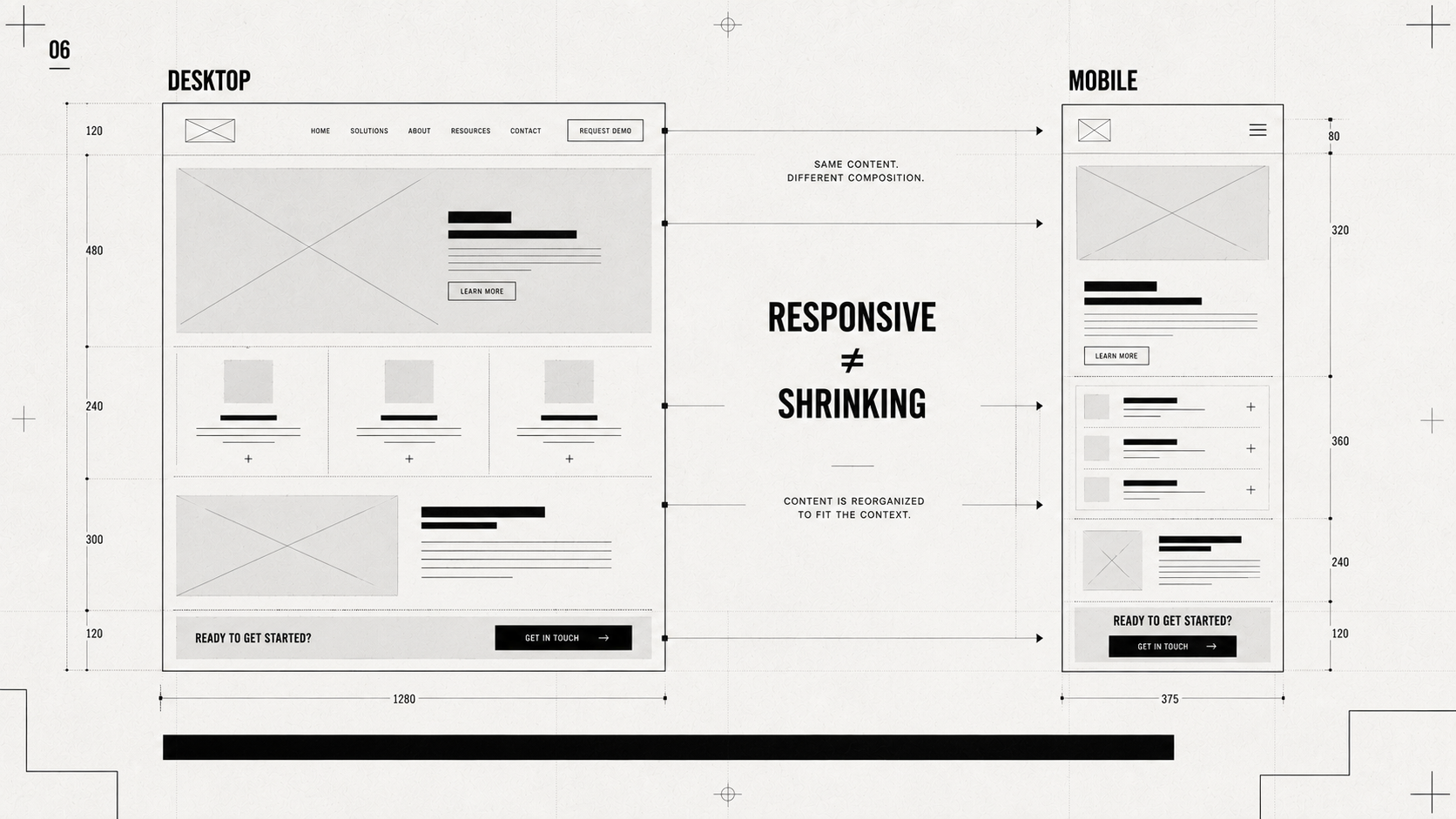
"Mobile responsive" should not mean shrinking the desktop website until it fits.
A desktop experience can rely on width, generous spacing, multi-column layouts, rich product visuals and complex interactions. Mobile requires different decisions about hierarchy and attention.
What should appear first?
Which visual details can disappear?
Should a comparison become cards?
Does an animation still improve the experience on a smaller screen?
Are buttons easy to reach?
Does a long B2B page remain readable?
Ask how the agency handles responsive design and quality assurance across devices.
The answer should demonstrate deliberate design thinking, not simply that Webflow handles responsiveness.
6. Understand their approach to SEO and AI search
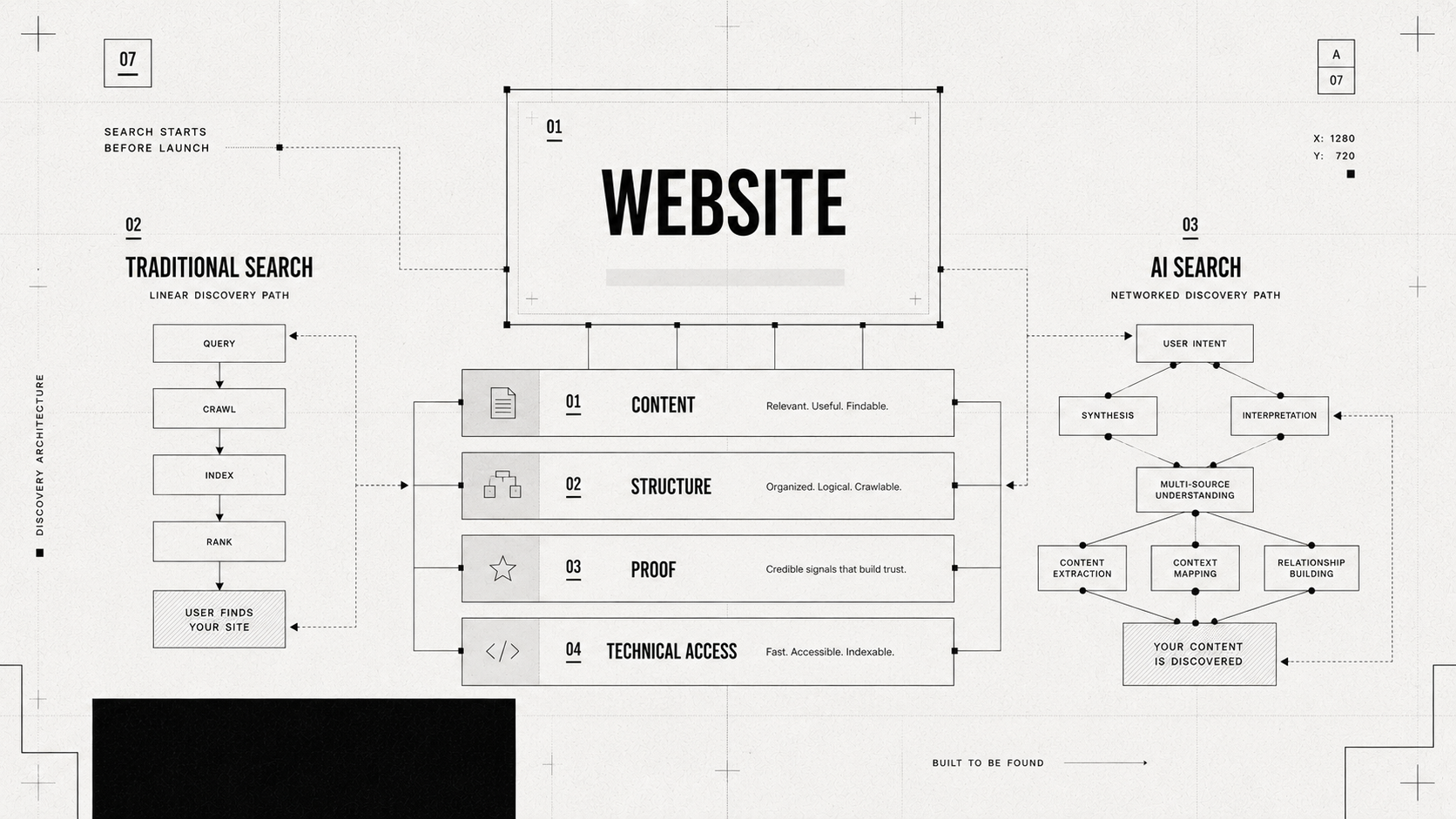
Search should not be bolted onto a website immediately before launch.
Site architecture affects discoverability. So do headings, internal linking, metadata, schema, CMS structure, page performance, redirects, content organization and how clearly pages answer important questions.
Today, B2B companies also need to think beyond conventional search results.
Prospective buyers increasingly discover and research companies through AI-powered experiences alongside traditional search. That makes clear positioning, structured information, useful content, credible proof and technically accessible pages increasingly important.
Envizn Labs treats SEO and AEO as part of the wider growth role of a website rather than as an isolated publishing exercise.
When speaking with an agency, ask what happens to search considerations during strategy, design, migration, development and post-launch work.
If SEO enters the conversation only when someone asks for title tags, it is probably entering too late.
7. Ask what happens after launch
Many agency portfolios end at launch.
Your business does not.
The website starts receiving real traffic. Sales hears new objections. A product changes. Search performance reveals opportunities. Marketing wants to test a different message. Another integration becomes useful.
A website that matters to the business is never truly finished.
That does not mean you need an indefinite retainer from day one. It means the agency should have thought seriously about ownership and continuity.
Ask practical questions:
- Who owns the Webflow project?
- How will your team be trained?
- Who handles bugs discovered after launch?
- Can the agency support new pages and campaigns?
- Can the relationship expand into SEO, frontend development, maintenance, automation or other digital work if needed?
Engagements at Envizn Labs often continue beyond the initial website into areas such as maintenance, product and frontend work, SEO and automation when there is a business reason to do so.
That is a useful standard to apply to any agency. Is the relationship designed around completing a project, or around helping the website continue doing its job?
8. Pay attention to how the agency communicates
Website projects involve opinions.
Founders have opinions. Marketing has opinions. Product has opinions. Sales has opinions. The agency certainly has opinions.
Without a clear decision-making process, those opinions turn into endless revision cycles.
Strong agencies make collaboration easier by establishing:
- Who needs to approve what
- When feedback should be provided
- How strategic decisions are documented
- How conflicting feedback is resolved
- What the client needs to supply
- Where project communication happens
- How changes in scope are handled
Pay attention to the sales process itself.
Are they asking precise questions?
Do they explain trade-offs?
Can they disagree constructively?
Are they clear about what they need from you?
Do they make complicated ideas easier to understand?
The way an agency communicates before you hire them is often one of the best indicators of how it will communicate once the work gets more complicated.
9. Look for evidence of business understanding
Industry experience can help, but do not turn it into a rigid checkbox.
An agency does not need to have built a website for a company identical to yours.
More important is whether it understands the commercial mechanics of businesses like yours.
For B2B technology companies, that may mean understanding:
- Long and non-linear buying journeys
- Multiple decision-makers
- Technical products that need simplification
- Demo or sales-led conversion paths
- Enterprise trust requirements
- Product-led and sales-led motions
- The importance of customer proof
- Marketing teams that need publishing independence
A team capable of understanding those dynamics can often learn a new category.
An agency that understands your industry's visual conventions but not how your buyers make decisions may struggle to produce anything beyond a competent-looking site.
10. Ask who will actually work on your website
The people on the sales call are not always the people doing the work.
Find out who will be involved in positioning, writing, design, development, project management, SEO and QA.
You do not need a huge team. You need the right capabilities connected.
That distinction matters. A small senior team working closely together can be more effective than a long production chain where strategy gets diluted every time the project changes hands.
You should know where responsibility sits and who is accountable for the final result.
11. Watch for these red flags
There are several signs an agency may not be the right partner.
Be cautious when an agency immediately agrees with every idea you bring them. You are paying for judgment, not just execution.
Be cautious when the portfolio is impressive but nobody can explain the business problem behind the work.
Be cautious when development is discussed as though the only requirement is visual accuracy.
Be cautious when SEO, content migration, responsiveness, CMS structure, QA and post-launch ownership remain vague.
And be especially cautious when a redesign is presented as the solution before the underlying problem has been understood.
Sometimes your website does need a visual overhaul. Sometimes the real issue is weak positioning. Sometimes the architecture no longer matches the product. Sometimes the company has grown but the website has not grown with it.
The agency's job is to know the difference.
Questions to ask before hiring a Webflow agency
A good agency conversation should leave you with fewer uncertainties, not more.
Before making your decision, ask:
- How do you decide what should change on our current website?
- Do you help with positioning and copy, or do we need to provide them?
- How do content and design influence each other in your process?
- How do you structure Webflow projects so our marketing team can maintain them?
- Who will actually work on the engagement?
- How do you approach CMS architecture and reusable components?
- How do you handle SEO during a redesign or migration?
- What does your QA process cover?
- What happens after the website goes live?
- Can you show us a project where the challenge was similar to ours and explain the decisions you made?
The substance of the answers matters more than polished sales language.
The best Webflow agency is not necessarily the one with the best-looking portfolio
Webflow has made it possible to build remarkably polished websites.
That raises the bar rather than lowering it.
When competent visual execution becomes easier to find, the differentiator becomes judgment. Knowing what to say, what to remove, what to emphasize, how to structure the experience, and how to create a website that remains useful as the company evolves.
For an ambitious B2B technology business, that is the standard worth hiring against.
Your website should not merely prove that you invested in a redesign.
It should make the company easier to understand, easier to trust, easier to discover and easier to choose.
Conclusion
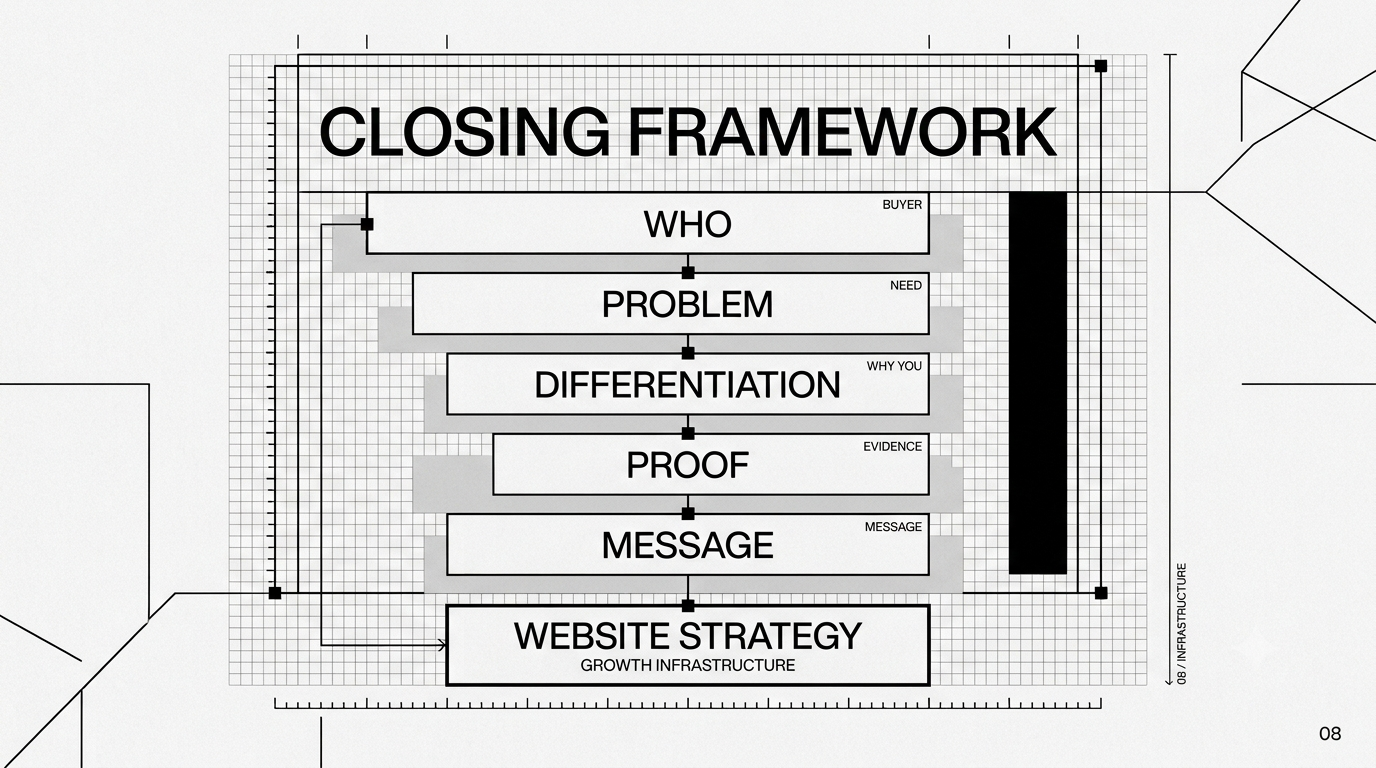
Choosing the best Webflow agency is ultimately about choosing the right kind of partner.
Technical Webflow skills matter. So do design credentials. But neither should be evaluated in isolation. The stronger question is whether the agency can connect positioning, content, design, development, search and ongoing improvement around the goals of the business.
Look for a team that asks difficult questions before drawing screens. Examine the thinking behind its portfolio. Understand how it builds for your internal team as well as your visitors. Ask about search, ownership, maintainability and what happens once the initial project is complete.
A great Webflow website is not simply a collection of polished pages.
Built properly, it becomes part of the company's growth infrastructure. A platform your marketing team can use, your sales team can trust and your buyers can understand.
That is the difference between hiring someone to build a website and choosing a Webflow partner capable of helping the website earn its place in the business.


Turn Your Vision into a Scalable Digital Experience
From brand to backend, we create systems and experiences that actually move the needle.
How to Do a Website Design Audit: A Practical Guide for B2B Teams

B2B Branding Strategies: 5 Ways to Build a Brand Buyers Remember